


25 September 2026
The bassline classic ‘My Destiny’ has enjoyed a surprising resurgence this year. During Autism Awareness month, the neurodivergent community began using it to soundtrack a trend of neurodivergent pride.
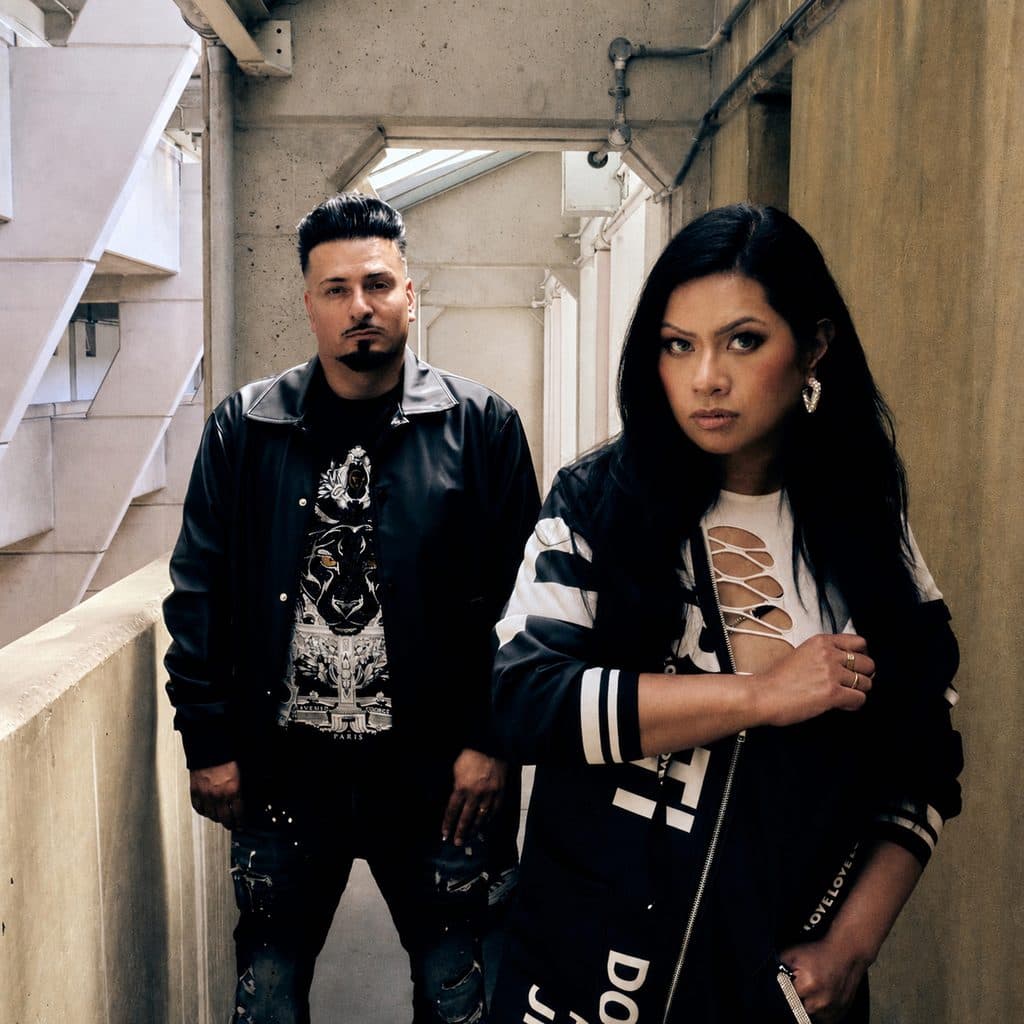
If this astonishes you, what may do further is the fact that two thirds of Delinquent, Mike Delinquent and KCAT, have children together and one of which is a neurodivergent son who’s stims are reminiscent of the vocal that was chopped up nearly 20 years ago. Mixtape Madness sat down with them to talk about this truly remarkable story, the power of Tik-Tok, and how neurodivergent parenthood affects their relationship to music:
What was your reaction to ‘My Destiny’s virality?
KCAT: Being a mum to two neurodivergent children keeps life pretty full-on. My son is autistic and both of my kids have ADHD, so neurodivergence is a big part of our family. What made “My Destiny” coming back feel so special, was that it actually started as a trend within the neurodivergent community. I wrote the song years ago about fate and destiny, so for that community to be the first to rediscover it, embrace it and give it a whole new life felt incredibly poetic.
From there, it spread into so many different trends and reached a whole new generation. With autism and neurodivergence being spoken about so much more openly now, the timing felt really meaningful to us. And on a personal level, our own kids now get to see us making music together, which makes the whole thing even more special.
Mike Delinquent: It exploded in America and the United Kingdom, which was crazy. We saw straight away in countries such as Australia and Germany, and in Eastern Europe too that it was going viral really quickly. It’s now being viewed and streamed worldwide, reaching Mexico, Brazil, the Ukraine and Spain. We just cleared over 10 billion views from all the different TikTok videos. The beauty of what’s happened with ‘My Destiny’ this time, is that it’s not all focused on one territory, which is special to us because our aim from the beginning was always for the song to be known worldwide.
In this case, I imagine the reinterpretation of your lyrics is a positive thing. Does it ever feel annoying when people don’t get the intended meaning of your words?
K: No not at all, it’s all in the perspective of the listener, just like art is subjective. Music to me is an art. Just like beauty is in the eye of the beholder. I’ve always written about personal subjects to me, but if someone hears it different that’s their interpretation and that ok. My Destiny is about fate, serendipity, something that’s meant to be. It was actually intended as a love letter to Mike.
When My Destiny first charted in 2008, The audience heard the song as more of a love song telling us they named their child Destiny, babies were conceived to the song, and they played it during marriage proposals and even walking down the aisle. This time round, the meaning feels even deeper for us, because it trended with the neurodivergent community. Our son is autistic and a very diverse character. So, when we heard the neurodivergent community resonated with “My Destiny’, it was a beautiful thing as it has taken on different forms of meaning, destiny in work, life, love, things that are meant to be.
What do you think it is about this tune specifically that made it resonate with the neurodivergent community?
M: Our song appeared to be used as a sound on TikTok in such a way that it promoted being proud being neurodivergent. We couldn’t believe it happened in April either as that’s Autism Awareness month. This was about wanting to be seen and heard. The meaning of the chorus was one clip which went viral. What we read in the comments was that people resonated with it because it’s their destiny to be who they are. Also, the repetitive “E”chopped up ad-lib that KCAT sings, is a sound made by many pre and non-verbal autistic people – including our son.
K: Our son makes the “Eee” sound a lot, he loves repetition. It’s called a stim. I think My Destiny has a great balance, it gives the listener enough time to process each element in the song. It’s not too overwhelming as the music and vocals marry well together. Again everyone is different. It could be a range of things. But judging by how it’s been received and comments we have seen and heard, it’s the repetition, lyrics, and overall sound.
I’ve heard you say before that bringing up neurodivergent children has made you realise that you two are neurodivergent as well. Is that right?
K: Yes definitely! These kids have taught me so much about neurodivergence and individuality. I’ve spent whole days investigating, researching, reading about how best to support them. So much so it’s taught me about myself. We think that creativity is very much connected to it. We have very gifted children who both also have creative minds, and they are so talented.
My son is not fully verbal but he finds such creative ways to communicate. We use visuals, music, pictures, and sing. Growing up I struggled with a lot of things that were similar to my sons’ sensory challenges. I always thought I was different and misunderstood, but found comfort in the arts. I sometimes felt that I could get my message across better to sing it, than speak.
Being in the Music industry I still struggle with some of the noises, the lights, crowds, even the social aspect. I still find it hard to transition from one thing to the other and can get overwhelmed quickly. It’s only now I discovered there’s actually a term for what I have been doing my whole life which is “masking”. I’m a very private person, and always feel like I work so hard to keep it together and hold it all in, where it’s others do it with more ease. I like to keep myself to myself, but mainly to regulate. Everyone is different. How I would respond to things might not be how my son would, but there are a lot of similarities in terms of repetitiveness, social anxiety, and things like that.
M: There are so many traits that I resonate with, which are mainly to do with how I feel inside. I mask every day! I feel very deeply, I get overwhelmed especially with the business side of the music industry, but at the same time I’m hyper-focused when it comes to creativity. I also hear music and connect sounds with colours, which is called synaesthesia. That’s all interlinked with being neurodivergent too. It’s a topic of it own, I could talk about it all day!
The trend My Destiny is linked to imagines a society where neurodivergence is the primary way people are. How do you think society needs to change to be more accommodating for neurodivergent people?
M: Public places could be much more accommodating. An example, why aren’t there spaces in shopping centres that are for neurodivergent families who feel overwhelmed? Airports are trying their best, airlines are training more staff about autism, but why aren’t staff in other industries also being trained about autism and traits within children?
The main obstacle is knowledge. Many families have experienced a similar thing where they’ll be having a day out, and their child is unable to regulate themselves – which is something the child doesn’t have a choice about. The child may need to have movement or make a sound. You find that’s met with a lot of disapproval from the public sometimes. What can change is for people to be educated on what exactly is going through an autistic person’s mind for certain behaviours to happen. That would help massively.
How has parenthood changed your relationship to music?
K: Being a parent (and a SEN parent at that) and making music is very challenging. You have to make time for both. My children are always my main priority but we have to feed them too, and set an example. You still have to work hard. I always tell my daughter “if you’re going to choose a career, make sure you love what you do”. I see music as a treat for me. It’s my therapy. I look forward to creating musically even more now as time is always limited. Life doing music and being a mum is absolute chaos, but it’s never boring. I love it, it makes me feel alive and exhausted at the same time. I wouldn’t change it for the world.
M: It changes life for the better when you become a parent. Since they’ve been born, I’ve worked in different genres. I created a Latin jazz album, which was a tribute to a child that we’d lost before the two that were born. I think it makes you feel deeper. It makes you commit to projects that are meaningful and makes you much more focused.
K: It can be disruptive with them asking “Mummy, this, Mummy that” in the background while you’re trying to record. But they’ve made us more creative with time.
M: Music is even more important to us as parents because it’s a very useful tool for someone who is preverbal, like our son is. He has more vocabulary because of music. Music uses a different side of the brain when you sing, compared with when you talk.
What do your kids think of My Destiny?
M: They both love it. They’ve heard it for many, many years now, and I think that naturally there’s going to be that over exhaustion of it, but they dance to it, our daughter is on the recording of our live performance, our son also sings a few phrases of the song at home.
K: To be honest I think they’re kind of tired of it now! It was at point where whenever I went on TikTok, My Destiny would come on straight away, and one creation after the other. I’d look at my daughter and she would mouth the words or roll her eyes like she was fed up.
I didn’t realise how much of the lyrics my son knew either. We tried the ‘My turn, your turn’ activity with him, Mike, didn’t we?! So it’s where we say or sing something first with a microphone, and then hand it to our son to complete the rest. So he waits for his turn after I sing the first verse of My Destiny, then hand him the mic, and he sings the rest. It was so good, it made my whole year. He’s got such a lovely little singing voice too.
M: It was amazing to see. They’ve also seen, KCAT perform it live at The O2 which was a moment we’re really proud of, because hearing the song is one thing, but to see it live in such a big arena was special. I’m hoping they’ll get to see that again when they’re older.
My Destiny’s virality has clearly been a beautiful thing for you, but do you think TikTok can devalue music in any way?
M: I think there’s an argument to say that TikTok is a newer form of sharing ringtones on Bluetooth, as they were shorter versions of a full song. But this time it’s visual and more impactful.
My Destiny has been in the Top 20 charts before, but now it’s travelled more than it did the first time. From that perspective, I don’t think we can say that TikTok has devalued it. It’s just a modern way of consumption. There’s going to be purists that want to release through a record label with DJ support etc, but we’ve got to look at where we are in 2026. Social media plays a big part. It’s so difficult for musicians to be heard. KCAT and I have released music in the past and we’ve both encountered blocking or gatekeeping. TikTok doesn’t have that. The music speaks for itself and if it connects, it connects !!
Do you think as a couple making music together brings you closer?
M: Music was a big part of the initial connection that brought us together. I think it matters as a couple, when you have that common interest. Music’s such an important part of our lives and we’ve extended that to our children now as well.
What’s next for you?
M: We’ve performed several times this year and it’s been amazing to see the reaction to My Destiny all over again. We have more performances coming up in October – in London and Wales. We are working on more music and just building from this point upwards. We’re also just enjoying the fact that after so many years on, the song is still reaching people out there. For us it’s about the song and its meaning, whichever genre that may lie in. We want to show our versatility this time.
Words by Charlie Edmondson
Photography by Joe Magawon