


6 November 2026
Words by Andra Cee
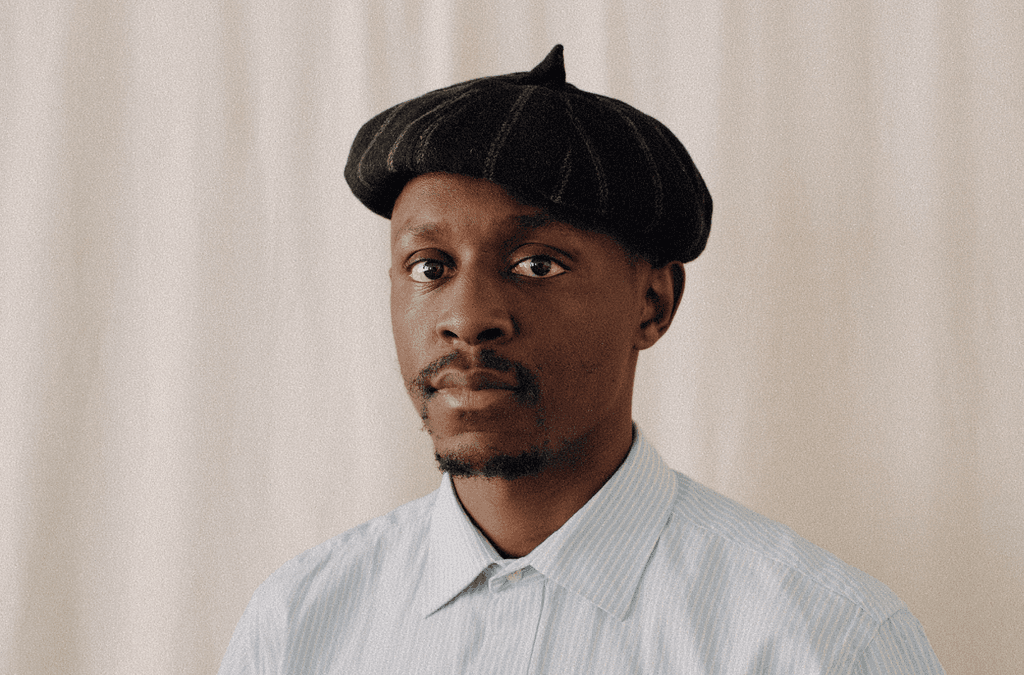
From rap to folk music, South African artist Jabulile Majola has spent years finding his voice and learning how to tell his story through music. Growing up in a family of 27 children, raised by a pastor who adopted him at a young age, his childhood taught him a lot about love, acceptance and the importance of understanding others.
After spending over a decade making rap music, Jabulile found a new way to express himself through folk and singing in isiZulu, the language he grew up speaking. His music is shaped by his personal experiences, his faith and the questions he has asked himself throughout his life.
His latest project, ‘Ipasi’, follows the release of his EP ‘Isitifiketi’ and explores identity, love, heartbreak and the changes we go through as people. The project also reflects his belief that life is a continuous journey and that learning to accept the things we cannot control is part of growing as a person.
Mixtape Madness caught up with Jabulile Majola to talk about growing up with 26 siblings, the story behind his name, his relationship with love, and the making of ‘Ipasi’:
Your life story is remarkable and your aura shows that you’re a person of depth. You were adopted as a toddler by a pastor who became your father, who also raised 26 other children. You learned about love from a person who displayed a great amount of selflessness, unconditional love and sacrifice. How did that shape the way you experience love as a person?
We were raised in a Christian home, and so what informed his love was his faith in Jesus as well. And so I think that sacrificial aspect of love is something that means a lot to me because there’s a cost to that.
You know, sometimes it’s very easy to say, “Oh, I love you.” It’s a very easy word to say these days, but I think the action, behind that is what makes it either super powerful or nothing at all.
So that’s something that I’d say I experienced, and that’s what I learned about love. I’m still learning it now as well.
You grew up with 26 siblings, they all have their own personalities and ways of being. One of the main elements of love is acceptance and you had to learn how to live and care for people who are very different from you. How does this impact the way you see and interact with people in your day-to-day life?
I mean, you said it already, it’s acceptance. It’s understanding that people might never share your worldviews, they might never understand you as a person, but it doesn’t mean that you must shrink as a person.
But it also doesn’t mean that you must impose yourself on people as well. It just means that you learn to listen to people without this idea of “I’m gonna respond, I’m gonna say this.”
And it’s something that I’m still learning to this day, you know? But it’s a very humbling thing as well.
I think growing up with a lot of siblings, you learn to share whether you like it or not. But you also learn that life is not about you as well. There’s always a bigger picture beyond the confines of who you are, basically.
When you look back at your childhood, what are the main memories that come to mind that shaped the person you’ve become today?
School, because I went to this rural school for primary from grade 1 to grade 7. It’s a school called Halalisani.
This is where I really learned how to speak isiZulu. This is where I really learned how to imagine and think in that way and write isiZulu as well, which is what my music is. This is the language that I’m using to sing all these songs.
And then another thing was church as well. I became a Christian at a very young age and this was a very big part of our lives as well.
And then what else? Sports. We played a lot of sports when I was growing up, rugby specifically.
You speak openly about your biological mother, who disappeared 3 days after she gave birth to you. You learned about her name a few years ago, which you decided to adopt as your stage name. Is there a part of you that hopes that, one day, she’ll see your name somewhere, recognise it and find her way back to you? Or does the name mean something different to you?
I don’t really think about that, but the meaning of me taking her stage name was that it was a journey that I had gone through, a journey of acceptance.
You know, I think in life there’s certain things that we will never understand why they happen and how they happen, but I think we have to accept exactly where we are and move from where we are.
And I think for me that was a very massive thing to do because my biological name or my real name is Jabulani and it’s very similar to Jabulile. It’s basically the same thing.
And so that’s why I call myself Jabulile. There’s a love in naming as well.
You seem to experience emotions very intensely and wear your heart on your sleeve. There is something beautiful about being able to feel life so deeply, but it also leaves you vulnerable to being hurt. What is it like to move through life with your heart so open, experiencing the highs and lows in their fullest form?
You know, the reason why I don’t mind sharing about who I am is because, for a long time in my life, when I went through struggle, I could never explain what it was. I could never find words to say exactly what I was going through and so the moment I started to find language to express my experiences, the more I just wanted to talk about it and actually put it out there.
And what I’ve started to learn is that people experience the same thing and I might be giving them the language to actually express what they are experiencing.
I remember I was very into music because that’s what I feel like it was doing for me. You know, when I was maybe going through fear and anxiety or something,
There’s certain songs that I would hear that explain exactly what it actually, really feels like, and so that’s why I don’t mind actually talking about who I am and telling my story and where I come from because I remember trying to find the language to describe what I was actually going through.
As a spiritual person who reaches so many people through their art, what is the impact you want to have on people after they experience your sound and spirit?
To accept life as it is and to understand that we will never be in control of it. We just need to allow it to happen.
From the age of 13 till 28, there’s a point where I stopped crying. I decided to bottle up emotion because of how life was, you know, and the reason why I wouldn’t cry is because I never wanted to let people in, I didn’t really want to love. I didn’t really want to formulate long-lasting relationships because what if people break my heart, or what if I lose the friends that I’ve that I’ve made?
And so you walk through life with this shallow version of yourself just so that people don’t get in and actually connect with you on a deep level.
So this was me for like a long time and then I remember when I was 28 was the first time I actually cried again and that thing really opened me up.
I share what I share because I’m at a place in my life where I’m free, you know what I’m saying? Basically, I have died to myself. That stuff doesn’t bother me anymore. A dead horse doesn’t feel pain when you kick it, so it’s something like that.
But the reason why I think people may connect with that is because people are living real lives. They’re going through it in real time as well, and sometimes it’s not about me standing out there and being like, “Oh, it’s gonna be fine.”
I understand. Sometimes I don’t understand, but I know that human beings are resilient as well. There’s something in a human that wakes up the next day after what should have broken them the previous day, you know what I’m saying.
Let’s talk about your album, Ipasi. You explore different themes including identity, self-discovery, change, love and heartbreak. What did your life look like when you started working on it?
I was still on tour. I was doing a road show last year for the EP that I had released, which is called The Certificate, and so it was a very exciting time.
I was obviously meeting a lot of people that were listening to the music and seeing how successful that was going. And so it was quite daunting in the beginning, because you think to yourself, “Okay, how can I top the previous projects?” It’s all this pressure that we put on ourselves as artists sometimes.
The beginning stages of the project happened where I’m from and that was a very special part of the journey. I think what set the scene for me was that we were somewhere close to the Drakensberg mountain range.
There’s this place called the Vulture’s Hiding. This is where the vultures come down and eat all these dead animals and whatnot. This is where I was before we started writing this album and the reality of life continuing when things die. It’s riveting, it’s sobering, but it’s also true as well.
You know, life waits for no man. It’s like a river that’s just passing through. And that was a very humbling thing because you know sometimes we walk around like we are magnificent, when we are not.
When life happens and then we die, life continues. It just does what it’s always been doing. Life is ancient. It’s been here before we even started.
And so, that’s the perspective that I was having in the beginning of my writing. And I think that also alleviated a lot of unwanted pressure that I was having about “Oh, I must do this and I must do that,” and it’s like “No, you don’t have to do anything, just do what you’ve always been doing.”
What song off this album carries the biggest piece of your heart?
“Umuzi Okhanyayo”, which means “Lighthouse”. That’s the one that means most to me because it’s the meaning of it. It’s basically a blind man. It’s a blind man asking for sight so that he can see the one that loves him.
It’s based on a story in the Bible where Jesus spits on the ground and then he makes clay out of it and puts it on the eyes of a blind man. It’s the idea that the first person that the blind man saw is the one that loves him, which was Jesus.
And so it starts.
I start talking about this obscure house. It’s not that important, you know. But then as you go further into the song, the house turns into a person.
So the lighthouse is not so important when you’re on land, but when you’re in the sea and you are a sailor lost at sea, you look for the lighthouse. It’s when we ask questions from a place of honesty, with the willingness to change, with the willingness to see.
You know, one thing that I don’t want to ever be is to be a person that says they can see when I’m blind. It’s a very dangerous thing to say “I can see” when you actually can’t see or to say “I understand” when you actually can’t understand.
Even though your story is unique, the way you write makes aspects of it feel very relatable. What are some of the things that people say to you after they hear the project?
Most of the time, they feel like I’m speaking to them. It’s so weird because I don’t necessarily have an approach to how I write that makes people feel like I’m talking to them.
Again, it’s reality. It’s like breathing. You know what I’m saying? You don’t calculate how you’re gonna breathe now, for example, or how you’re gonna breathe tomorrow. You’re just doing it as you go.
But you have to first know yourself in order to be able to just say things in the most honest way.
When I look back at the two projects that I’ve released, there’s not a single song where I’m like “Oh, I wish I did it like this.” Everything that I said was supposed to be said in that time and in that way.
You made rap music for over a decade before you transitioned into folk. Do you approach songwriting differently now compared with when you were making rap? What has changed about your creative process?
I have a couple of songs. Well, not necessarily songs, just freestyles.
I was very into rap music, and I love the fact that I think I learned discipline through doing rap. You always have to have something to say. And it’s very much about the technical aspect of it.
It was just mindblowing. The syllables that you use, the rhythm and the different flows and all of that, I think it’s really helped me with songwriting even now.
I think I still approach it the same. You know, with each song there’s a specific flow to it. There’s a specific rhythm to it.
I mean, I think when you understand isiZulu, you speak isiZulu, you will learn very quickly that it’s a very rhythmic language. There’s a lot of movement within the language as well.
And so I think I approach it the same way. The metaphors and all of that. It’s when I listen to music, I tend to gravitate towards lyrics as well, towards words, and so it’s something that I’ve always been in love with.
You have two beautiful collaborations on this project with Lia Butler and Thando Zide. When you work with another musician, do you prefer collaborating with people who understand your vision immediately or people who challenge you to try something different?
I think it’s actually both. So with Thando Zide, she’s somebody that I feel understands what I’m doing. She just has an empathetic ear when it comes to hearing the spirit of the song and what the song is actually about.
Where with Lia Butler is just like anything can happen, you know what I’m saying?
And both of them are just amazing songwriters in their own right – their vocabulary, how they express their emotions, how they express what they are going through. It’s just so amazing and so I do feel like when I’m writing with them, there’s a bit of that challenge to actually be better.
Instrumentation wise, with all that we’re gonna use, I always make sure that I put in as much as possible, more than what I actually have, so that the song actually goes forward. It goes further.
Another thing that I learned from most of the collaborations is that I actually don’t have to say anything. They just go in there and they do what they’re doing and I trust what they’re doing.
What has changed in your life since you finished Ipasi?
My perspective. I think with identity specifically, it’s not necessarily a fixed thing and life in general is not a point of arrival. It’s a continuous journey.
I think that’s what has changed my perspective. It’s to continue thinking. It’s to continue praying. Continue living.
There’s not a point of “Oh, I know everything now and everything that I prayed for has started happening.” You know, “I’ve lived a life.” No, it’s not that. It’s just you continue.
Any message for your fans in the UK?
Thank you for buying the tickets! I never know what to say when people ask me this question.
From growing up alongside 26 siblings to finding his voice through music, Jabulile Majola has a remarkable story and an equally inspiring outlook on life. His wisdom, kindness and ability to find meaning in his experiences are reflected in the music he creates.
With ‘Ipasi’, he continues to share his story while giving listeners something they can relate to and learn from and we look forward to seeing where his journey takes him next.