


16 October 2026
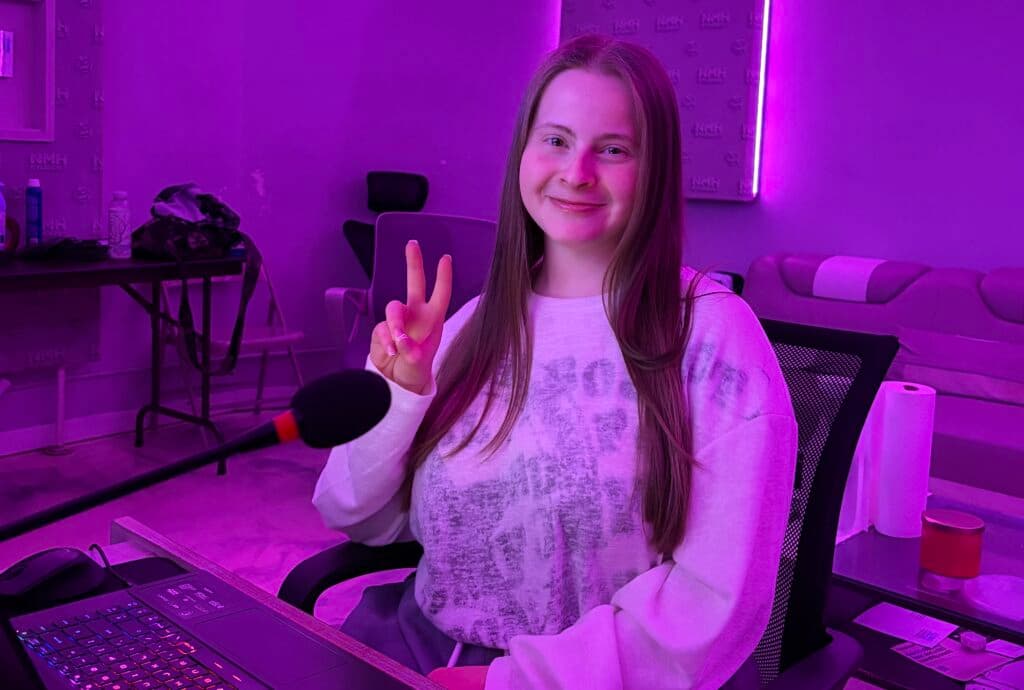
If you listen to trap, it’s inevitable that Lollypopbeatz’s “type beat” bedroom series would’ve popped up on your timeline at some point, and you would’ve stayed till the end, totally hooked. The show even caught the attention of Chief Keef, whom she cites as a key inspiration.
With a restless, anxiety-inducing pace and heavy 808s that reverberate even through the cheapest wired earphones, you don’t need to anticipate the hard hit. Her tracks deliver relentless punches one after another.
Lollypop’s earliest memories of music are the antithesis of the moody, dark-trap production she is infamously known for on social media. Her early years were soundtracked by Britney Spears and S Club 7’s ‘Reach for the Stars.’ She couldn’t tell us when her music tastes transformed from Selena Gomez to Future, but fans of rap production will be grateful that it did.
One of the first instruments she learned how to play was the piano, while after at one point having three different piano teachers, she felt it best instead to opt for a self-taught, self-realising way of learning music via watching YouTube tutorials. This discipline has carried her to where she is now, using obsessive repetition to perfect her craft. She sits down with MM fresh from a trip to Lisbon to discuss her creative process, the UK underground, and what is next for such a prodigious talent:
How did you first get into producing, and what did the process of learning to make beats look like for you?
I didn’t know a single person that made beats or any artists at the time… I went onto YouTube, and it showed me big producers showing how they made songs using FL Studio. I was learning from zero, and it’s such a long process. It’s annoying sometimes because you have ideas in your head, but you don’t know how to execute them. But it just comes with practice. I didn’t want to start with all the best things because then you don’t learn what’s good and what’s not. I started off with the worst headphones, an eight-year-old laptop, and a red screen. You don’t need great equipment to start, because if you can make music on that then you can do anything.
How do you approach the creative process of making a beat, from the first idea to deciding when it’s finished?
I hum into my phone, listen back, and then start meddling with a random instrument I think might be interesting to play around with. A lot of the beats you don’t like are ones that end up getting used, which is so weird. I try not to delete anything ever.
Do you feel like the music you make affects how you view the function of music and your attitude to life generally?
Music can really change a mood or a feeling. For some people, it’s a way of reflecting. For me, even if I’m sad or happy, I generally gravitate toward trap. Music is not my escape; I tend to separate my emotions from the process.
How do you bring yourself into a sound, and contextualise it within the history of a genre? How much of yourself do you put into the production when your role is essentially to provide a beat for an artist to step onto, where they then talk about things?
I wouldn’t say I’ve created a sound yet. When you start making beats, everyone is inspired by everyone, so it’s a mix of so many styles. A lot of my beats are pretty generic, and I’m not gonna say they’re not. I wouldn’t say that I’ve created anything unique before or even try to. I’m trying to make stuff that maximises my time and is realistically usable. I always think, who can I hear on this track? With trap as well, mentally it feels more exciting to look back at 2016-2018. I’m especially inspired by MetroBoomin and Southside, and for me, given where the genre is right now, it makes more sense to be nostalgic about it for the time being.
I’m interested to know what you think Trap needs to elevate beyond its “golden era”, and how you see the UKUG scene shaping Trap’s evolution over here.
I think the UKUG scene is probably the most exciting right now because a slightly new sound is developing. Some UK artists are breaking through globally, and in America it’s a lot easier for them to get bigger. Let’s take Future for example. His new music is sick, but his old stuff was just better, and it doesn’t feel the same anymore. At the same time, I’m not sure what it needs because I’m not someone who gets sick of stuff that often. I’m quite narrow-minded in that sense and in my taste; I don’t actively try to find new artists. Maybe that’s why I’m stuck in 2016 listening to all of that stuff. It takes me back to a feeling I don’t think can be replicated anymore, but I hope it eventually inspires new ideas.
You’ve collaborated with a lot of artists from the States. There’s always a lot of discourse about the UK scene and the US scene, but I’m intrigued to know whether you’ve noticed any differences in how US artists approach collaboration and music in general.
I think Americans are generally more outgoing, and it’s a better vibe to work with them because they’re keen to network and lock in. I’m not sure if that’s because I’m on a trip, my audience is mainly American, and everything feels new and exciting; it’s not my everyday environment. But they welcome people who aren’t from the States, and I always feel embraced, which is nice. In the UK, I think it’s harder to work with bigger artists; they have closer circles, and there’s less collaboration. In America, there’s a bigger market and a bigger pool of mid-sized artists, so it’s a bit easier to access them for work.
Who’s one of your favourite artists that you’ve worked with?
I feel like I say this every time, but there’s a drill artist from Chicago called MAF Teeski. I’ve worked with him really closely, and he’s shown me more love than any other artist. Also, Paris Byrant from New York has such a nice voice; he sounds a bit like Tory Lanez, and he works so efficiently on my beats. It’s a nice switch from hard rap to something more melodic, so I’ve had good sessions with him, too.
What’s one of your favourite bars that an artist has rapped over your beats?
This sounds really big-headed, but MAF Teeski has a song named after me called “Lollypop”. He has this verse, “I’m known for sippin’ drop / I got this beat from Lollypop”. And there’s another one in his song “Gucci”: “try me / get pop like Lolli (like my producer)”. What’s funny is people thought it was a diss, but it’s just a play on words and a shoutout. I love a little shoutout.
What inspired your producer tag and which other tags do you like as well?
Well, the one most people know of was actually a joke. Someone commented on my TikTok saying your tag should be your mum saying, “Lauren, dinner’s ready”. So I recorded that and people thought it was hilarious, but it’s never been on an actual song I’ve produced. My actual tag is “Lollipop”. I got it from VoiceTagGods.com. There are lots of different voices on there, and big producers got their tags from there too. One time, I was watching a rapper’s livestream, and he saw my name pop up and said, “Lollipop, what it do cuz?” I screen-recorded it, and that was my first tag. In terms of my favourite tags ever, I love MetroBoomins because he’s got multiple. I love the one in “Father Stretch My Hands” by Kanye, because the tag blends so seamlessly with Kanye’s lyrics; it goes unnoticed: “if Young Metro don’t trust you, I’m gon’ shoot you”.
The music industry is a complicated world of big personalities, politics, connections, nepotism, structural inequalities, and more. What have you discovered is the reality of existing within that?
It is generally such a negative industry; it’s harsh and competitive. I wouldn’t advise you to go into it if you don’t have thick skin, because it will definitely toughen you up. I’m glad it’s toughened me, because otherwise you’re going to crumble. The music industry can be full of fake promises and people who aren’t genuine, so be careful and learn to recognise who’s actually good to work with. I’ve had issues with people not paying me for beats and with artist managers engaging in bad business practices.
You learn to be more cautious through those experiences, and my biggest advice is not to trust too easily or rely too much on other people. Music is also subjective, so someone might tell you your beat is terrible while someone else thinks it’s their favourite. You can’t care too much about what everyone thinks. Overall, I’m a much more confident and tougher person than when I started. The industry teaches you a lot, and over time you develop a different outlook and become more knowledgeable about how things work.
How do you navigate it without letting it completely harden you and lose your softness or, you know, your character?
I am more of a softer person. I’m more quiet, so people might think they can take advantage of me. I just try to treat others how you want to be treated, and handle yourself, like present yourself, and people will respect you for that, but you know I always worry. Say if a studio session wasn’t going well, there were no beats that the artist liked, for example, you know, it’s just remembering to not get affected by that and just try your best to just think on your feet or like do something that can help the situation. Don’t really fight back. Just leave if you know it’s not really worth it. Like leaving the studio if you need to. So I struggle with confidence all the time. Still, like even though I’m a lot more confident, it’s just nerve-racking.
Chief Keef is someone who’s given you your flowers, and he is someone who’s followed that producer-to-artist pipeline successfully. Do you ever see yourself wanting to be more front-facing as an artist, or is it always strictly beats?
Over the past six months, I’ve realised I don’t enjoy making beats as much as I used to, but I’ve always loved music and the feeling it gives me. I think I’d love to explore being an artist, especially singing, but I’ve never really felt confident in my voice. I’ve even tried recording myself in the studio with Auto-Tune, and I still think about it a lot. I know it will take years of practice to develop my voice and feel more confident, but I do have a vision of myself on stage. I’ve even thought about becoming a DJ as another way to perform. Just because I don’t enjoy making beats as much as I used to doesn’t mean I’ve stopped loving making music. Who knows, maybe one day I’ll release a song, but if I do, I’d want it to be a surprise.
Is there anything coming up soon, or in the future, that you’re excited about?
I’ve got another trip to America planned in two weeks, so that’s top of mind. Yeah, that usually boosts me up, and I get a wave of inspiration. I also really want to start streaming, so I need to really lock in with that. I’d really love to have my own streaming show, kind of like a PlaqueBoyMax vibe. But who knows?
Words: Sakithya Sothinathan