


21 November 2026
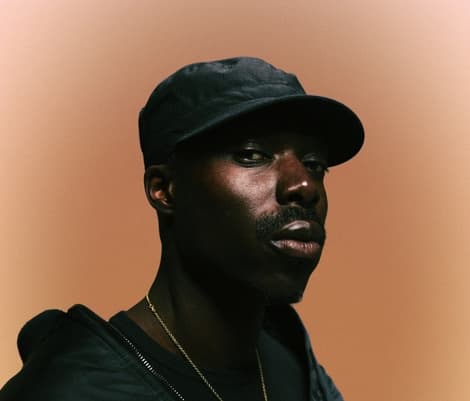
From growing up between Ghana, London and Amsterdam to signing with Nas’s Mass Appeal, Serious reflects on his journey through the music industry, the importance of authenticity and the emotions behind his long-awaited return.
Eight years is a long time in music. Artists emerge, trends disappear and audiences move on almost as quickly as they discover something new. For Ghanaian-German rapper Serious,
those eight years have been filled with personal challenges, industry frustrations and a necessary period of growth. Now, with a new chapter unfolding under Nas’s Mass Appeal Records, he’s returning with a different perspective and plenty to get off his chest.
His latest project, It’s Too Late, is more than a musical comeback. Described by Serious as “organised rage”, the record channels years of disappointment, broken relationships and
industry politics into something deeply personal. Rather than allowing those emotions to consume him, he has found a way to put them into his music. But to understand the artist Serious has become, it’s worth looking at where his story began.
Born in Germany to Ghanaian parents, Serious spent much of his early childhood moving between different countries. At just a few months old, his mother took him to Ghana, where he remained until he was two. His childhood was then spent travelling between Amsterdam, where his father lived, and London, where his grandmother was based, before eventually
settling in Germany at seven.
Despite growing up across different European cities, his Ghanaian identity has always remained central to who he is. “Within my four walls, it was Ghana. It was the mannerisms, it was the rules, it was everything,” he explains. When asked whether he ever felt caught between cultures, his answer is immediate: “Nah. I’m African.”
That sense of identity extends into his music. Growing up around English-speaking relatives, Serious was introduced to UK grime long before he began establishing himself as a rapper.
Artists such as Skepta, Wiley and Sway formed part of the soundtrack to his childhood, eventually influencing his decision to rap in English rather than German.
“I wanted my grandma to understand. I wanted my cousins to understand me,” he says. “I always wanted it to be bigger than just Germany.”
It was a decision that came with its challenges. When Serious began releasing music around 2015, Germany’s music industry was not necessarily welcoming towards an artist choosing
to rap in English. While others questioned his direction, he remained committed to the sound he wanted to create. “I’m stubborn,” he laughs. That determination would eventually help him establish a name for himself within Germany’s underground scene, opening doors to opportunities far beyond the country he called home. However, success did not come without its lessons.
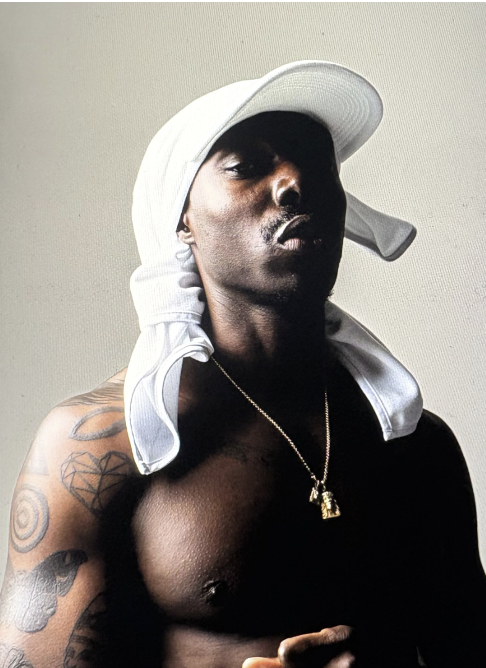
Reflecting on the eight years since his debut album, You Should Have Known, Serious admits that time has changed both his perspective and the people around him. “There’s people that I started with and those people are not around me anymore,” he shares. “I think that time really humbled me.”
Perhaps the biggest transformation has been his understanding of the business behind the music. Where he once approached his career purely as an artist, he now recognises the importance of contracts, ownership and protecting his future. “Now I feel more like a businessman,” he explains. “Now I understand how important it is for your future to always make sure that the paperwork is straight.”
It’s a lesson that feels particularly relevant as he enters his next chapter with Mass Appeal Records, the label co-founded by hip-hop legend Nas. For Serious, the partnership represents a full-circle moment, especially considering Nas was among the first American rappers whose music inspired him to write. Before signing, Serious had already attracted attention from some of the industry’s biggest names. He recalls conversations with Def Jam, Atlantic Records, Epic Records and Top
Dawg Entertainment, alongside a potential deal with Roc Nation, before the pandemic.
Yet it was an unexpected connection that eventually led him to Mass Appeal. A friend with industry connections mentioned that he would be meeting Nas and offered to play Serious’s
music. Initially, Serious was sceptical. Having experienced the uncertainty of label interest before, he was reluctant to get too excited. Then came the call. After an initial conversation with the Mass Appeal team, Serious found himself speaking directly to Nas over FaceTime.
“He was like, ‘Yo, I’m a fan,’” Serious recalls, still sounding surprised by the moment. For an artist who had grown up studying Nas’s music, hearing those words was difficult to
comprehend. The relationship would later see Serious join Nas on tour, an experience that gave him a new understanding of longevity in hip-hop.
Every night, after finishing his own performance, Serious would stay behind to watch Nas perform, studying the energy, presence and connection he maintained with his audience.
“I never left after my performance,” he explains. “I wanted to learn.” Watching Nas command the stage night after night encouraged him to think beyond immediate success and consider the legacy he wanted to leave behind. “If I ever want to leave something in the world, it’s a legacy like he’s having right now.”
Despite signing to such an established label, Serious is clear that the partnership hasn’t fundamentally changed his creative approach. Instead, it has reinforced how much responsibility artists must take for their own careers. He describes a label as “gasoline to the fire that’s already burning”, explaining that artists still need to build momentum, develop marketing strategies and understand the business themselves. That independence is particularly important when considering the story behind It’s Too Late. The album was born during a period when Serious felt increasingly overlooked by an
industry that had once welcomed him.
As the years passed, the opportunities that previously came his way began to disappear. Brands were no longer approaching him with the same enthusiasm, bookings became less consistent and relationships with people he had worked alongside for years began to change.
For Serious, it was a painful reminder of how quickly perceptions can shift when an artist is no longer constantly visible. “It’s like you’re gone and they don’t care why,” he explains. “Some of them are going to be like, ‘Oh, you fell off.’”
He also recognises how dramatically the music landscape has changed. The mystery that once surrounded artists has increasingly been replaced by algorithms, short-form content
and an expectation to remain visible at all times.
On the album’s track Politics, Serious addresses industry gatekeeping and the pressure to compromise his identity for attention. “People don’t want you to be authentic no more,” he says. “They want you to be goofy. They want you to be crazy. They want you to entertain them.” Although he understands the importance of connecting with audiences, he refuses to turn himself into someone he doesn’t recognise simply to generate views. “I still have to find my way around doing stuff that is still authentic to me.”
That frustration ultimately became the driving force behind his latest project. Interestingly, It’s Too Late wasn’t always intended to carry its current title. Serious reveals that the original
name was To All My Kinfolk, before a moment of reflection completely changed his direction. He remembers leaving his house for a walk, listening to beats and thinking about everything he had experienced. Frustrated by the way certain people had treated him during his quieter years, he made a decision to channel those feelings into music. “I’m gonna get back into this,” he remembers telling himself. “Once it’s my time, it’s too late for everybody that turned their back.”
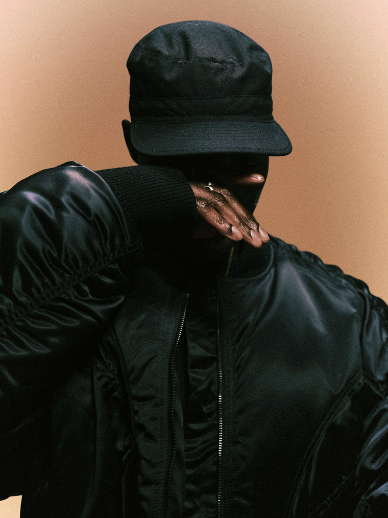
Even the album artwork reflects that sentiment, with Serious deliberately turning his back to symbolise the people who had turned theirs on him. Musically, the project also marks a return to his earliest influences. While working on the record, Serious found himself naturally gravitating towards sounds reminiscent of the grime music he grew up listening to. It wasn’t something he had consciously planned. In fact, he reveals that another album had already been completed before It’s Too Late began taking shape.
As the sessions progressed, however, the sound developed into something entirely different. “It was kind of like it sounded like grime somehow, but it didn’t have grime drums,” he explains. That connection to the UK is also reflected in the project’s collaborations, including South London’s Shaun Sky and Zino Vinci, an artist Serious speaks about with particular admiration. “He’s really one of the best artists that I ever heard,” he says of Zino, confidently predicting that his breakthrough is only a matter of time.
His appreciation for the UK scene extends beyond those featured on the album. During our conversation, he mentions ENNY, Knucks, BINA and Novelist among the artists he admires, revealing that he had also hoped to collaborate with several other UK talents during the project’s creation.
For someone whose musical foundations were built on grime, these connections feel less like an attempt to enter a different market and more like a natural continuation of his story.
Yet beneath the project’s aggressive delivery and industry commentary lies a more vulnerable message. When asked what he hopes listeners take away from It’s Too Late, Serious returns to the phrase that has come to define the record: organised rage.
For him, the album represents the process of confronting anger rather than suppressing it. Growing up in a church environment, he was frequently taught the importance of forgiveness. But as he experienced betrayal and disappointment, he began questioning what forgiveness actually meant.
He recalls struggling with the expectation that people should simply move on from situations that had genuinely hurt them. Eventually, his understanding began to change. “I’m not forgiving that person for that person. I’m doing that for me.”
It’s a perspective that gives the album a deeper meaning. While tracks throughout the project contain moments of confrontation and frustration, Serious sees them as part of a
much larger emotional journey. He points towards Black Sun as the record’s final release of tension, the moment where he
says everything he needs to say. For him, forgiveness doesn’t mean pretending something never happened. It means allowing
yourself to experience the anger, disappointment and frustration without letting those feelings define your future. “Sometimes you have to say what you have to say,” he explains. “There’s a process in between.”
As our conversation comes to an end, it’s clear that Serious is no longer the same artist who entered the industry almost a decade ago. He’s more aware of the business, more protective of his creative identity and increasingly comfortable with the idea of starting again.
With It’s Too Late, he’s not simply trying to reclaim the attention he once had. He’s making peace with the journey that brought him here, while reminding the industry that his story is
far from finished. And perhaps that’s what makes the album’s title so fitting.
For those who counted him out, it might be too late. But for Serious, this feels like the beginning of something new.