


3 November 2026
Words by Ralph Okobz
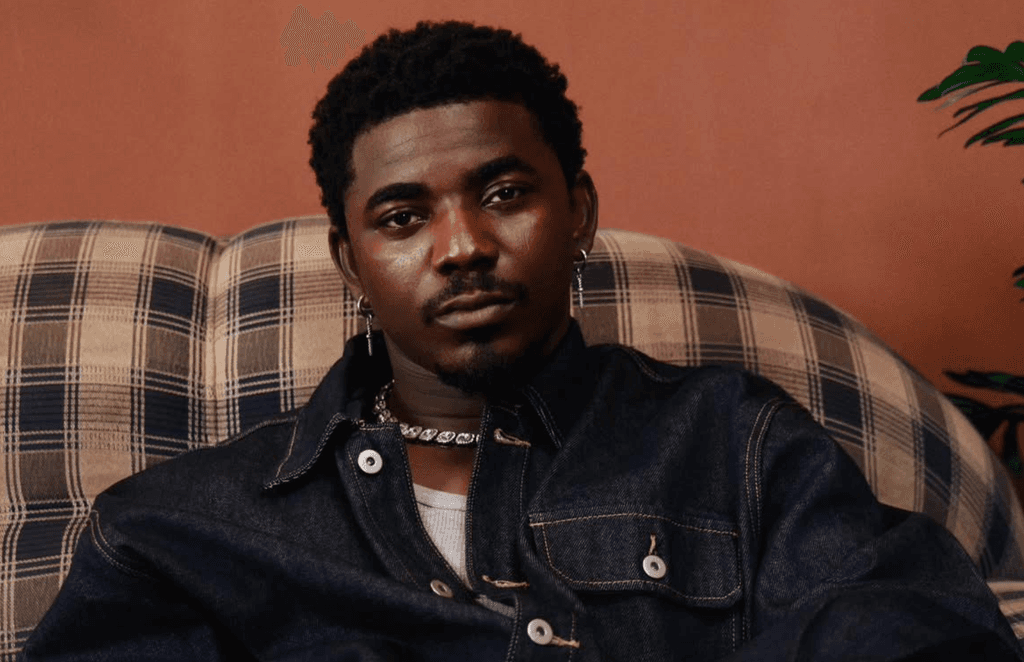
Llona does not do gimmicks, does not chase trends, and sure as hell does not do “Afro depression”. The Nigerian artist, raw, unfiltered and allergic to boxes, writes every line from lived experience, channelling the grind of the streets into music that refuses to leave listeners where it found them.
With his new album “On the Road”, the man who once moved through a “homeless era” is accelerating forward, building entire ecosystem to lift his fans with him. In a wide ranging conversation he tears into genre labels, reveals the real life fire behind his bars, and makes one thing crystal clear. He is not here to depress anyone. He is here to move the culture, and his people, to the next level.
The phrase “Afro depression” makes him visibly recoil. “It is wild to me,” he says. “It is okay to say Afrobeats, that makes sense. But ‘Afro depression’? It feels engineered, like something cooked up in January just to put a label on it. I do not go into the studio thinking, ‘I want to make people depressed.’ That is so cringe. I stand up and say, ‘I want to go sing. I want to make songs.’ The idea of deliberately creating music to depress people? What the fuck is that?”
He pauses, then leans into the heart of it. “I love being Nigerian so much, except when the labels do not reach my heart.” To illustrate, he points to Adele. Her music is widely understood as expressive and emotional. “Now imagine if Adele was in Nigeria, what would they call her music? When someone asks what Adele does, you talk about how it makes you feel. You do not invent some made up category. Telling someone ‘Oh, he does Afro depression’ instead of describing how the music makes you feel, that hurts me. It really does.”
Llona’s resistance to labels runs deeper than branding. He came up in what he calls a “gimmick era”, in a country defined by hustle, where artists often feel pressure to perform a version of themselves for attention. “That is fine for some, but not for me,” he insists. “I am not that type of person, and I never want to be. I want to make music that uplifts people, that changes lives, puts people on the right path, makes them happy, makes them dance. Not music that feels like, ‘Okay, we have to sing this sad scenario because that is the wave.’”
Authenticity is non-negotiable. Llona does not write fiction. “I only see artists who write pure fiction as multi-talented in a different way. My multi-talented days of just making up stories are over. Back then I could write, ‘I see this girl, I want to go home with her, her father is alone’, that is a story that never happened. But the Lord has never and can never create a song from pure fiction through me. Every single line, if you wake me up at 2 a.m. or 1 a.m. and ask me where it came from, I will explain it to you. It is real.”
That commitment to truth makes the simplest questions surprisingly difficult. Asked what kind of music he makes, he laughs at the impossibility of the answer. “It is like asking me to introduce myself. And I promise you, that is one of the hardest things I can do. If you see me, I will just say, ‘My name is Llona. I am from Nigeria, and I am an artist.’ That is all. Trying to package it neatly does not feel honest.” He adds, almost in passing, that he suspects he has chronic ADHD, undiagnosed, but something he feels in the intensity of deep conversations like this one.
What truly defines Llona, however, is the relationship he maintains with the people who ride with him. Stories circulate of him stepping in when a fan’s phone failed during a spontaneous filming moment in Port Harcourt. “When I was in the streets, I know exactly how it feels when someone makes your day,” he says. “Act of service is part of who I am. I love my fans so much, like, really love them.”
That love is taking concrete form in Llona City, an app he is building for his community. It will not just be a fan hub. “It is a place where you can get jobs. I am working with companies that trust my brand so that whenever they need creative directors, videographers, photographers or other talent, we can connect people directly. Music changed my life grossly. The only way I can pay that back is by making people smile and making their lives better, not just through the songs, but by contributing to their pockets too.”
He is clear eyed about the journey so far. He does not want fans who discovered him in the homeless era, or during earlier projects, to remain in the same place while he moves forward. “I want progress for them, financially, mentally, physically, spiritually. Just like I am moving, I want them moving. I want my fans to be able to buy a house close to me one day. Genuinely. That is how I show them I love them. I want them to be as big as I am becoming.”
The title “On the Road” was never abstract for Llona. After the breakthrough of “Homeless”, he spent seven months travelling across twenty six cities, performing night after night. “Just like the name said, literally on the road,” he explains. “Travelling for seven months does shape you. It changes a lot of things about you. It makes you grateful for earth itself, the land, the water, the people.” He is clear that the album could only carry that name because he had actually lived it. “I will not name my album ‘On the Road’ if I am not genuinely on the road. The tour was tied to the second album. I had to be on the road, and I was.”
That stretch of constant motion turned the project into both a journal of the tour and a deeper chronicle of his life. Themes of trust, masculinity, emotional control, self reflection and navigating uncertainty run through the songs, drawn from the realisations of the past few years. After “Homeless” connected with listeners who felt the same emotions even if their stories differed, Llona fully accepted a dual identity. “I fully accepted that I am not just an artist. I am also a storyteller. I really embraced that on this album.” The tour itself felt like a homecoming, especially for an artist who had just released a project called “Homeless”.
Every city, every face, every emotion pushed him to embrace his pen completely.
The features arrived through what he repeatedly calls divine alignments rather than calculated networking. He had Blacko in mind from early on, the song sat with the Ghanaian artist for nearly ten months. When Llona randomly found himself in Ghana during the tour, he pulled up to Blacko’s house, played the full album, and by track five the verse was being recorded, unplanned, lights off, pure momentum. Friday’s appearance on “Look at Me” came just as organically. The second verse had already been written, when his manager asked who should jump on it, Friday’s name surfaced instantly. The verse that came back exceeded every expectation. Morello’s contribution traced back to an earlier spontaneous studio moment when a flute driven beat stopped Llona mid conversation and pulled him upstairs to record. “All of them were divine alignments,” Llona says. “None of it was really planned. They just got there.”
One track stands above the rest for him right now, “Anger Management”. It is his current favourite precisely because he is still inside the loop it describes. “Even though I know the pattern, I still have not been able to use the information to my own good. I still blow up. I still get mad for things I am not even supposed to be that angry about.” The song was born from a real morning after a serious fight with his brother. Their mother came home to mediate, tensions flared again. Llona left the house, drove to a friend’s place, and went straight upstairs to the studio without even announcing himself. His producer played a beat while Llona was still raw. “I was so mad. In my head I am like, bro, are you dumb? I am having a mental crisis.” Something told him to listen anyway.
The beat cut through the negative energy. Within seconds the words started flowing. He looked at his own face in the reflection of the moment, veins popping, body tight, and began questioning himself in real time. “Why am I even this angry? Why are you so angry?” What used to be a monthly explosion had become three, four, five times a week. The song is the sound of that self confrontation.
Those personal reckonings sit on top of a foundation poured in Northern and Middle Belt Nigeria. Llona is from Kogi State. He spent formative years between the village, Kano and Kaduna before arriving in Lagos in 2015. Life with his grandfather, a farmer and hunter, meant early mornings on the farm and evenings under the moon listening to his grandmother’s stories. “It was more of a cultural thing. Living in Kogi embedded my culture into my body. It gave me a sense of where and how my people are.”
The North taught him humility, hard work and a radical sense of togetherness. He still remembers the clay pots, native fridges, left under trees with a single cup for anyone, from anywhere, to drink. “That shaped my life. From the patience to the hard work, to how aggressive and stubborn I am, it all comes from that side.”
Spiritual rebellion formed another layer. Born Ahmed and raised Muslim, he later chose Christianity after deep grudges with his father. “If your religion does not teach you how to look for your child, I do not want to be part of that,” he recalls thinking as an angry young man. He gave himself the name Michael, after the archangel, the fighter. “I heard he was a fighter,” Llona says simply. “And I see myself as a fighter.”
The military instinct runs deep. As a boy in the village he fashioned guns from leaves and long pipes and played war while other children were in school. In Kaduna he once dreamed of the Nigerian Defence Academy, an ambition crushed by the reality that access often requires connections. His brother became a military man. Llona’s battlefield became different. “Maybe his plan was not for me to use a gun, but my voice. That is how I went to war with stagnation. I went to war with poverty. I went to war with my family, war with myself, war with every fucking thing.”
The same fighter who once built toy guns in a Kogi village is now building an album, a community platform and a path forward for everyone still riding with him. “On the Road” is the sound of that war being fought in the open, honest, unfiltered and still moving. All glory to God, he adds. Then, simply, “Let us keep moving.”