
MM Exclusive: Nubya Garcia


20 Mar 2026
Nubya Garcia is one of the most gifted instrumentalists of her generation. A saxophonist, composer, and bandleader, her work has cut through thanks to an inimitable sound that feels intrinsically linked to London. Across the best part of a decade her discography has shown artistic growth, with her most recent album, ‘Odyssey’, demonstrating her innate musicality through string arrangements and spoken word.
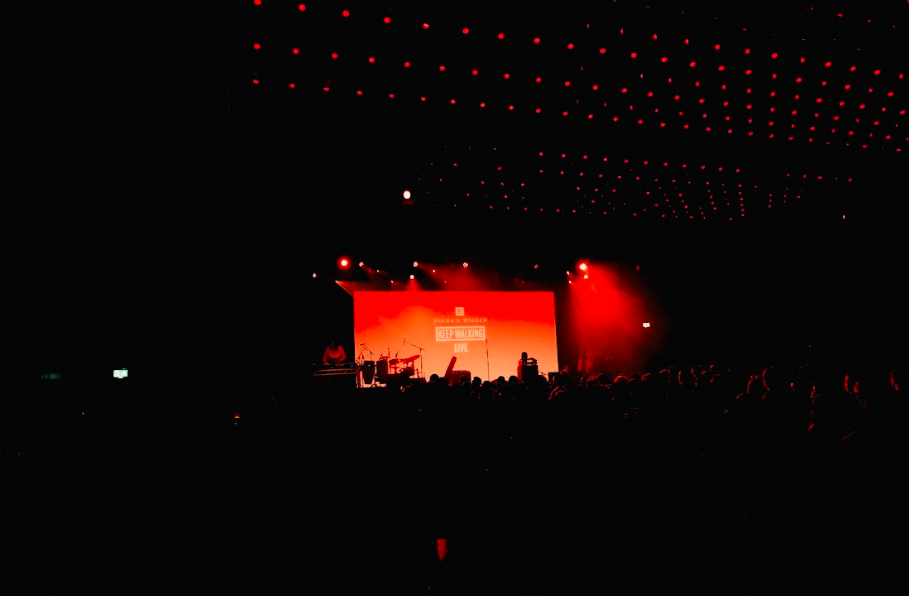
As part of Johnnie Walker and NTS’s ‘Keep Walking Live’ campaign to support music charity Brighter Sounds, Mixtape Madness sat down with Nubya to discuss her love of the saxophone, stepping out of her comfort zone, the importance of community in music, and her fascination with film scoring:
You started playing multiple instruments from a very young age, but what drew you to the saxophone?
I started out with so many which helped me to read music and take me to a different world. I’d been playing the clarinet for a bit, which kind of led me to the saxophone. You see it in big band on the front row, it’s loud, it’s got an unusual shape. It’s not like anything you’ve seen before as a kid, if that makes sense. It was just the complete opposite to the violin and string instruments that I’d learnt before.
This kind of energy kind of pulled me in, and once I started looking back at people who are legendary icons of the instrument, and had built something for the last 100 years, it became something more. It became this entry point into a whole world that other instruments didn’t give me.
Did you grow up with this kind of big band, instrument heavy musical diet?
I think there was more classical stuff connected to the violin when I was playing it. And my older siblings were in orchestras and stuff. So I kind of grew up going to those concerts from before I had any conscious memory. It was very much an understanding that there’s a whole spectrum of instruments and each can kind of operate in a different kind of avenue. And I think the saxophone for me took up just a completely different space and I really enjoyed that.
Can you talk to me about Tomorrow’s Warriors and the impact that had on you?
That was the first place where I think I made true bonds and found a true community. Everyone there kind of felt like they were in my world. They looked like me, they were from a similar background, whether that be heritage or financial background. You’re already connected on a level that you don’t have the language for – you just know that, “Okay, these are my people.”
Music has become very middle class, upper class, and elitist, and it has been that way since day dot. I was really grateful to find spaces where other people outside of that were being afforded the same opportunities, and different opportunities alongside each other. It’s a developmental organization and youth organization for people who want to learn.
They also have a specific focus on young Black people and women as well. That was maybe one of the only places where I think I’ve seen a lot of women instrumentalists. It was a really seminal and influential place for me and they have a beautiful ethos of each one teach one. We were taught by people from the generation above us so it makes you feel a little bit closer to the possibilities of what music can bring. Seeing people achieve it gives you the motivation that you need and it also gave me my whole community.
You’ve got a lot of strings to your bow as a multi-hyphenate musician. What does your process look like?
It really depends. Sometimes I’ll start at the piano, like, just on an acoustic piano, and I’ll just play and hit record on my phone, and kind of dive back into that later – or I may never, ever go back. I might put that into Logic or Ableton or Sibelius, or write it out on paper, and kind of score it out that way. It kind of depends on what I want to add to it and what I can hear in my head. I think it’s a really good exercise to do it without using the programs.
Sometimes I’ll go to a gallery and be like, “Okay, what artwork do I want to write about?” I’ll take a picture of it, and then maybe write a story. There’s so many different ways you can generate ideas and I think I really enjoy switching it up. Starting from a beat, or a drum machine, or bass line, or a melody line. There’s literally so many different ways you could do it and I am a child of all. I’m not a routine person.
Your first project, ‘Nubya’s 5ive’, came out back in 2017. How do you think you have evolved as an artist since then?
So much. That was nearly bloody 10 years ago! I think I have a lot more confidence. I think I have a lot more of a “let’s just try” attitude rather than when I was younger. There were no expectations and now there’s lots of expectations. Lots of timelines, lots of financial issues, just things that you learn when you get older.
If you’ve never done something before, it doesn’t mean you can’t do it. It just means you haven’t done it yet. If you’re already talking yourself out of it, that’s dry and it’s not going to help anyone, and I think realising that comes from experience. I’ve toured the world many times and that’s taught me a lot as well. I could be playing to 25000 people one night and 100 the next, and that’s something crazy to think about on paper. A lot of people wouldn’t know how to jump between the two. You don’t change, but your projection does, and how you hold the space and how you hold the room. I think I’ve learned that, and my composition skills have definitely just got better. That comes from time and listening, so with more time you would hope that you evolve.
And then coming onto your last project, ‘Odyssey’ – what was the thinking behind that title choice?
It comes from this need for exploration, expansiveness, adventure. The title kind of suggests this epic journey in the traditional sense of the word and the way that you’ve heard it before. It’s the journey you do alone, but in this context it’s actually not about that. It’s about seeing where you’re going, where you want to go. How are you going to get there? No one exists as an island. You are going to get you there with the support of other people.
I kind of got really fascinated with film music and what makes something feel cinematic. I wanted it to feel like the score to a film or a video, or a short film, as it were. Yeah, I’m really happy with it having that kind of effect and I feel the impact of it. It was a really interesting process and study to weave in something that I’d never done before, which is write for so many strings, conduct so many strings, and really weave that into the music over the time.
You have all the jazz legends who’ve made beautiful albums of jazz with strings. I’m not really interested in that right now, and I wasn’t when I was writing that album. I wanted it to feel like a one huge, cohesive journey where you’re like, “I don’t know where the fuck we are, but we’re somewhere.” That’s like what life feels like sometimes.
Would you class yourself as a jazz musician or do you think there is more to you than that?
I don’t know. I think I answer that question differently every day, and I feel like that’s fine. I feel like jazz is such an expansive, iconic, legendary space that not a lot of people know how to describe it, and it’s also indescribable. I think that’s a good thing. We’re quite obsessed with categorizing and putting words to things, because it helps you understand. It helps people engage with it, and it helps people be like, “oh, yeah, I want this in my house.” That’s what marketing has done for the music space as a whole.
It’s not even that I never want to reject that term of a jazz musician, because I think it’s an honor and a hell of an achievement to be classed as a jazz musician. It takes so many hours of practice and sensibilities to even be on the radar of it, so I think that’s amazing.
I will say however when you say you make jazz to 99% of the population, they have a very narrow idea of what you might do and think it’s not for them, which I think is heartbreaking. The music is meant to grow – that’s the purpose of music for the true music heads. They don’t really care what they’re listening to and the main question is does it make you feel something? I want to be a musician that makes you feel something.
On Odyssey you also wrote your own lyrics on ‘Triumphance’. What was that like stepping outside your comfort zone?
It was kind of tough, actually, and I wasn’t going to. My co-producer asked me to try and said we could always just use it as a placeholder. I did one take and sent it over and that’s the take we used. It was one of those situations really where I thought this will never make it to the album, I might as well fucking do it. It’s a vulnerable place, writing lyrics. I would do more maybe if it came into my head but it’s not something that comes naturally to me.
There’s not an iota of me that’s ashamed to say that, because it’s fucking hard. I’ve spent my life dedicated to other things and there are so many lyricists and wordsmiths out there who I can’t compare myself to just because I’ve done it once. I feel like my lyrics were pure intuition and I think there’s something beautiful in that.
At the time of this interview you’re preparing for a show with Johnnie Walker and NTS for ‘Keep Walking Live’, which supports the music charity Brighter Sound. Can you talk about the work you’re doing with them?
I was a workshop leader for Brighter Sounds a few years ago, and it was a really incredible process, so I’m beyond happy that we’re doing this weekend and it’s going to support Brighter Sounds, doing more of those projects. The projects that I led were up in Leeds and they were for women and non binary people. It was just absolutely amazing being able to sit in a room and over the week really discuss what composition is about; what it’s about being in this community, how to build community with each other. Years later, people who met on that course are creating together. They are making music together. They have built something.
I feel really strongly about the need for community and music, and how important it is. I’ve obviously grown up in London, and I had Tomorrow’s Warriors. To continue to build and provide opportunities where people like Brighter Sounds are able to do more of these things in more specific ways for the different people, and different kinds of music, is really special.
Finally, you’ve been making music your whole life but you’re coming up to ten years as a professional musician. What do the next steps look like for the next ten?
That’s a big question. I think for now I want to expand my creative endeavours. I produce my own records, and I love it. It’d be really amazing to put myself in that position with other people, and help facilitate that role in their music. I think I want to explore more film composition, for shorts, for big films, for TV. I think that’s like another discipline that I’d love to exercise and learn more of. I’ve also been touring for a hell of a long time, so I want to continue touring, but I want to continue touring in a way that is healthier where possible.
I think that’s really hard at the moment and no one is really talking about it. I kind of want to figure out a way to make this more sustainable and help, like, shed some light on what the realities are. I want to show what’s achievable to our generation, because all the hustling that we did can’t go towards nothing. I want to continue writing for my project and collaborating. Those are my immediate goals.
In the next ten years, I want to have a couple of big films under my belt and more albums out. I’d like to explore some different music that people wouldn’t necessarily assume from me, but also challenge what that means. I don’t think you should assume anything from a true artist■